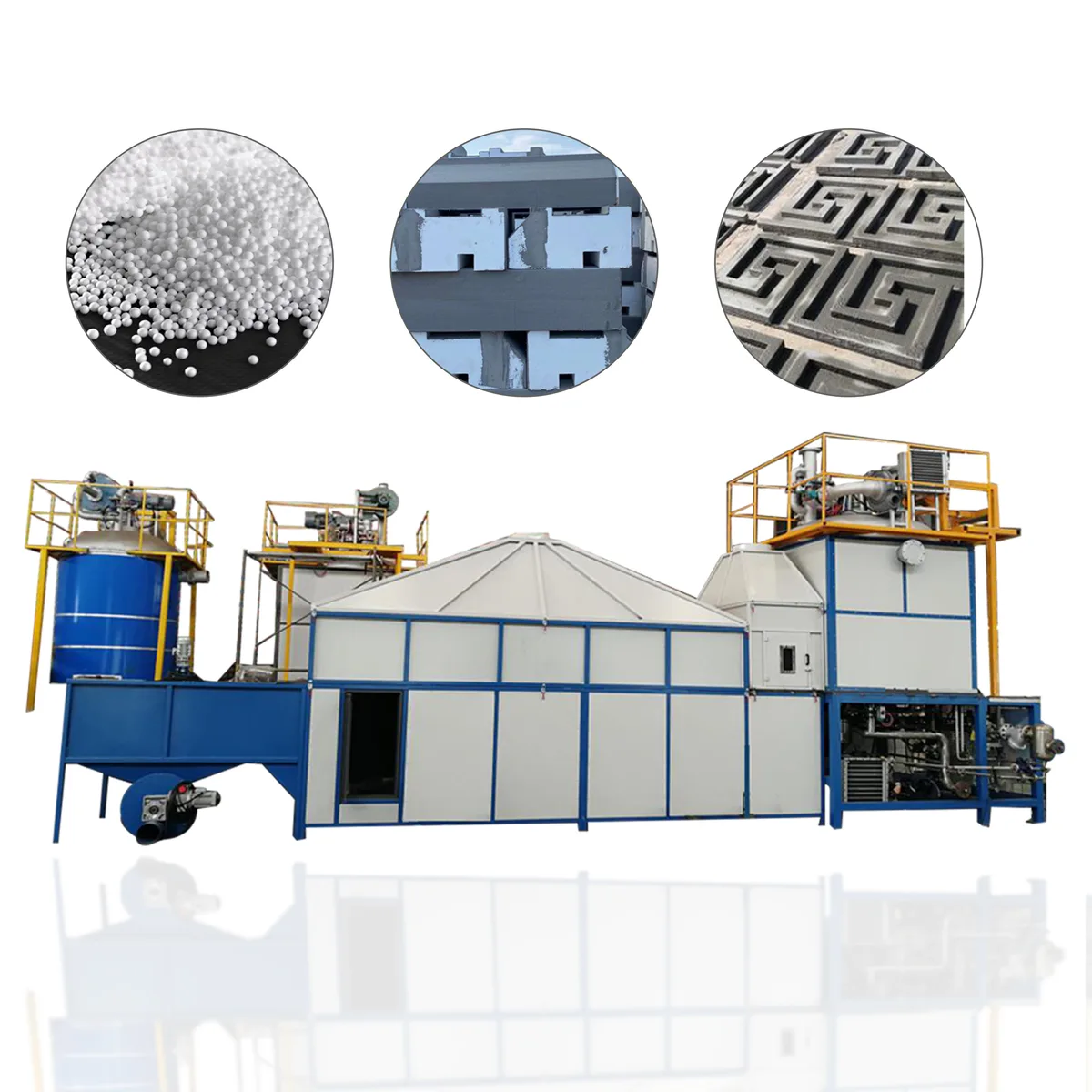
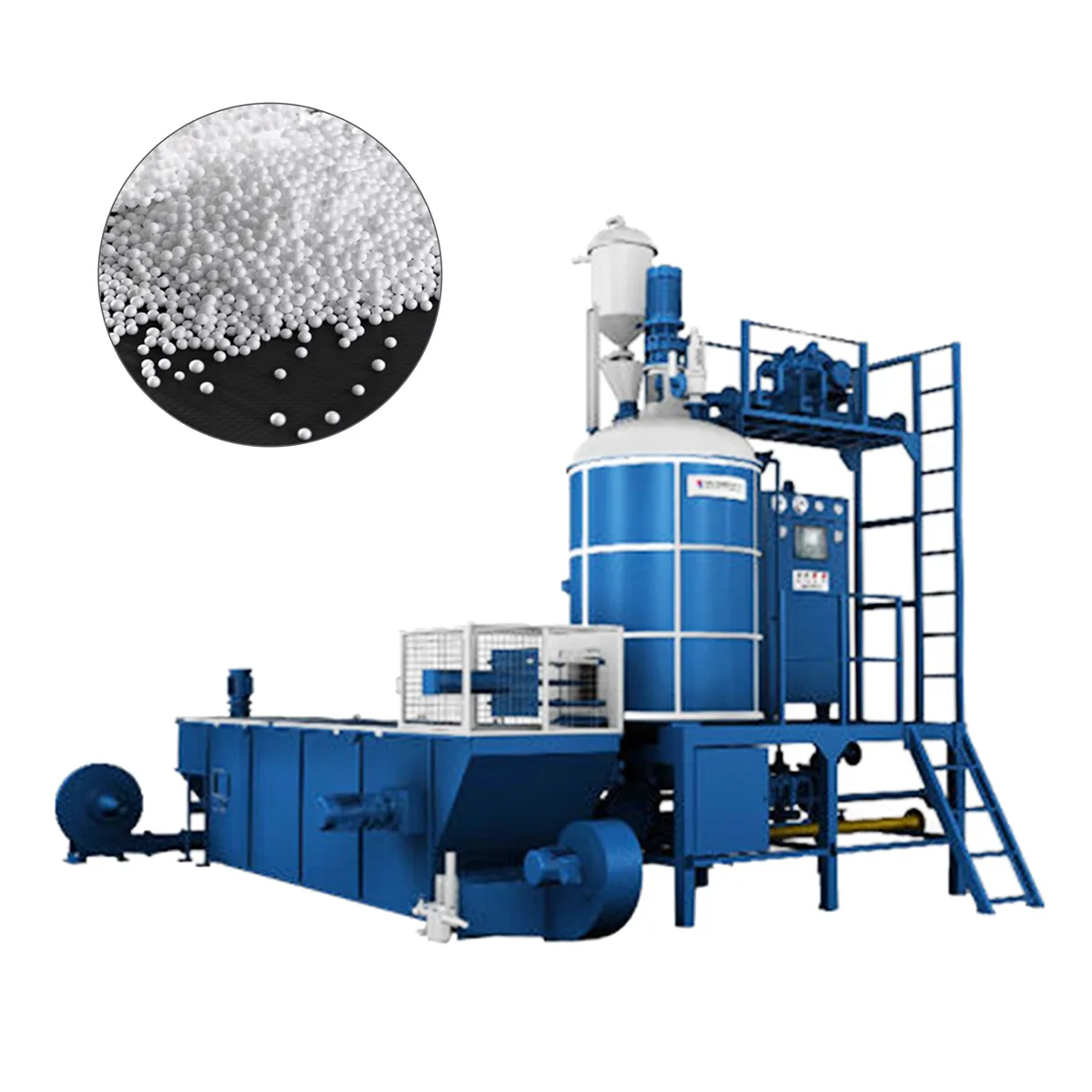
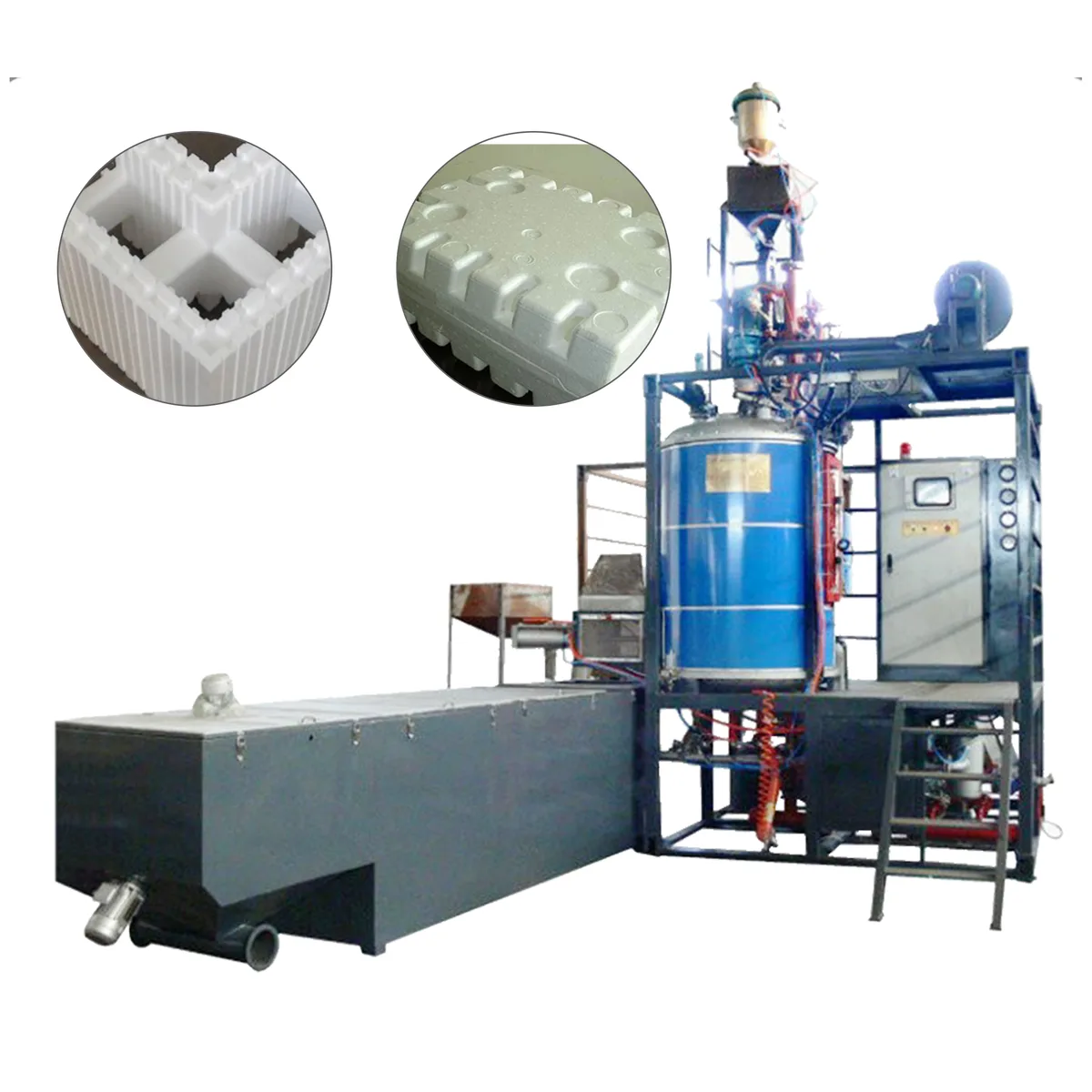
Selecting the right EPS pre-expander is one of the most critical decisions in setting up or upgrading an expanded polystyrene production line. The pre-expander is the first stage of the EPS manufacturing process, where raw polystyrene beads are exposed to steam and a blowing agent (typically pentane at 5-7% concentration) to expand them to the desired density. A mismatch between your pre-expander and your downstream equipment can lead to inconsistent bead quality, excessive energy costs, and production bottlenecks that reduce your output by 20-40%.
This guide covers everything you need to know to make an informed purchasing decision, from understanding the two main types of pre-expanders to matching machine capacity with your production targets.
Batch vs. Continuous Pre-Expanders: Understanding the Two Types
EPS pre-expanders fall into two categories: batch (also called intermittent) and continuous. Each type has distinct advantages depending on your production scale and product requirements.
Batch Pre-Expanders
Batch pre-expanders process a fixed quantity of raw beads per cycle. The operator loads raw EPS beads into the expansion barrel, introduces steam at 0.08-0.15 MPa for a set duration (typically 60-180 seconds depending on target density), and then discharges the expanded beads into a fluidized bed dryer. Each cycle produces a uniform batch with consistent density.
- Density control: Batch machines offer superior density consistency within each batch, typically achieving ±0.5 kg/m³ variation, making them ideal for applications requiring tight tolerances such as insulation boards (EPS density 15-25 kg/m³) and precision packaging.
- Flexibility: Changing target density between batches is straightforward — simply adjust steam time and temperature. This makes batch machines well-suited for manufacturers producing multiple density grades.
- Lower initial cost: Batch pre-expanders generally cost 15-30% less than continuous models of similar capacity.
- Operator skill: Requires trained operators who understand the relationship between steam pressure, expansion time, and final bead density.
Continuous Pre-Expanders
Continuous pre-expanders feed raw beads into the barrel at a constant rate while simultaneously introducing steam, producing a steady stream of expanded beads. They use a screw or agitator mechanism to move beads through the expansion chamber.
- Higher throughput: Continuous machines can achieve 30-50% greater hourly output than batch machines of similar barrel diameter because there is no downtime between cycles.
- Automation-friendly: Easier to integrate with automated production lines, reducing labor requirements by up to 40%.
- Consistent output: Once calibrated, continuous pre-expanders maintain stable output density with minimal operator intervention, with density variation typically within ±1.0 kg/m³.
- Higher investment: Expect to pay 20-40% more upfront, but the cost per kilogram of expanded beads is often lower at high volumes (above 3,000 kg/day).
Key Specifications to Evaluate
When comparing pre-expander models, focus on these critical specifications. Understanding each parameter will help you avoid costly mistakes and ensure your machine meets your production requirements.
Barrel Diameter
The barrel (expansion chamber) diameter is the primary factor determining batch size and throughput. Larger barrels hold more beads per cycle but also require more steam and floor space. Common barrel diameters range from 900 mm for small-scale operations to 2,000 mm or more for high-volume plants.
Our PE-900 with its 900 mm barrel is designed for production lines outputting 500-1,500 kg/day of expanded beads. The PE-1400 with a 1,400 mm barrel handles 1,500-4,000 kg/day. For large-scale operations producing 4,000-8,000+ kg/day, the PE-2000 with its 2,000 mm barrel provides the capacity needed without multiple machines.
Expansion Capacity (kg/h)
Capacity is typically rated in kilograms of expanded beads per hour. Be cautious when comparing manufacturer specifications — capacity varies significantly depending on the target density. A machine rated at 400 kg/h at 20 kg/m³ density will produce considerably less at 12 kg/m³ because lower densities require more steam and longer expansion times. Always compare capacities at the same target density.
Steam Consumption
Steam is the largest operating cost for a pre-expander, typically accounting for 35-50% of total operating expenses. Steam consumption is measured in kg of steam per kg of expanded beads produced. Efficient modern pre-expanders consume 25-40 kg steam per cubic meter of expanded beads, while older or poorly maintained machines may consume 50-70 kg/m³. A difference of 10 kg steam/m³ can translate to $15,000-30,000 in annual energy savings for a mid-volume plant.
Expansion Ratio
The expansion ratio describes how many times the raw bead volume increases during pre-expansion. Standard EPS beads can be expanded 40-80 times their original volume in a single pass. For very low densities (below 12 kg/m³), a second expansion pass may be required. Make sure your pre-expander can achieve the expansion ratio needed for your target densities without requiring double expansion, which adds cost and complexity.
Motor Power and Control System
The agitator motor power affects bead quality and energy consumption. Underpowered agitation leads to uneven steam distribution and inconsistent bead sizes, while excessive power wastes electricity. Look for machines with variable frequency drives (VFD) that allow you to optimize agitation speed for different bead types and densities. Modern PLC-based control systems with touchscreen HMI (Human-Machine Interface) reduce setup time by 60-70% compared to manual controls.
Matching Pre-Expander Size to Production Volume
Choosing the right size pre-expander requires working backward from your daily production targets. Here is a practical method:
- Step 1: Calculate your daily expanded bead requirement in cubic meters. For block molding, a standard 4,000 × 1,200 × 1,000 mm block is 4.8 m³. If you produce 30 blocks/day, you need 144 m³ of expanded beads daily.
- Step 2: Convert to weight using your target density. At 18 kg/m³, 144 m³ equals 2,592 kg/day.
- Step 3: Divide by effective operating hours (typically 16-20 hours/day accounting for setup, cleaning, and breaks). 2,592 kg ÷ 18 hours = 144 kg/h required capacity.
- Step 4: Add a 20-30% safety margin for peak demand and future growth. 144 × 1.25 = 180 kg/h minimum capacity.
Based on this calculation, a PE-900 would be sufficient. However, if you plan to scale to 60 blocks/day within 2-3 years, investing in a PE-1400 from the start will avoid the expense of replacing equipment later.
Pre-Expander Specification Comparison
| Specification | PE-900 | PE-1400 | PE-2000 |
|---|---|---|---|
| Barrel Diameter | 900 mm | 1,400 mm | 2,000 mm |
| Capacity (at 18 kg/m³) | 150-300 kg/h | 400-800 kg/h | 800-1,500 kg/h |
| Steam Consumption | 30-38 kg/m³ | 28-35 kg/m³ | 25-32 kg/m³ |
| Motor Power | 7.5 kW | 15 kW | 22 kW |
| Barrel Volume | ~0.6 m³ | ~1.5 m³ | ~3.1 m³ |
| Floor Space Required | 3 × 2 m | 4 × 3 m | 5 × 4 m |
| Ideal Daily Output | 500-1,500 kg | 1,500-4,000 kg | 4,000-8,000+ kg |
| Control System | PLC + HMI | PLC + HMI | PLC + HMI + SCADA |
Common Mistakes Buyers Make
After working with hundreds of EPS manufacturers worldwide, we have identified the most frequent purchasing mistakes. Avoiding these can save you tens of thousands of dollars and months of frustration.
1. Undersizing for Future Growth
Many buyers purchase a pre-expander sized exactly for their current production volume with no margin for growth. When demand increases by 25-30% within the first year (common for growing operations), they face the choice of running the machine beyond its optimal capacity — reducing bead quality and increasing maintenance costs by 15-25% — or purchasing a second machine, which doubles floor space and labor requirements. We recommend sizing for 130-150% of your current volume.
2. Ignoring Steam Infrastructure
A pre-expander is only as good as its steam supply. A PE-2000 operating at full capacity may require a steam boiler producing 1.5-2.0 tons/hour. If your existing boiler can only supply 0.8 tons/hour, the pre-expander will underperform regardless of its rated capacity. Always verify your boiler capacity and steam pipe diameter (minimum DN80 for PE-1400, DN100 for PE-2000) before ordering.
3. Overlooking Raw Material Compatibility
Not all pre-expanders handle every type of EPS raw material equally. Bead grades vary in size (0.3-1.6 mm diameter for raw beads), pentane content (4-7%), and polymer characteristics. If you plan to process multiple bead grades or switch between standard EPS and specialty grades like graphite-enhanced EPS (grey EPS), ensure the machine's agitation system and steam distribution can accommodate these variations.
4. Choosing Price Over Total Cost of Ownership
A pre-expander that costs $5,000 less upfront but consumes 20% more steam will cost you an additional $8,000-12,000 per year in energy. Over the typical 10-15 year lifespan of the machine, this adds up to $80,000-180,000 in excess operating costs. Always calculate the total cost of ownership including energy, maintenance, spare parts, and downtime before making a decision.
5. Neglecting After-Sales Support
EPS production equipment requires periodic maintenance and occasional repairs. A supplier that ships the machine and disappears will leave you stranded when you need replacement parts or technical support. Verify that your supplier maintains spare parts inventory, offers remote troubleshooting, and can provide on-site service within a reasonable timeframe. At ChinaEps, we stock all critical spare parts and offer 24-hour remote technical support.
Installation and Integration Considerations
Beyond the pre-expander itself, consider how it will integrate with your overall production line.
- Fluidized bed dryer: Expanded beads must be dried before aging. The dryer capacity should match or exceed your pre-expander output. A typical ratio is 1.5-2× the barrel volume.
- Aging silos: Expanded beads need 6-24 hours of aging before molding to allow air to diffuse into the cells and pentane to partially escape. Plan silo capacity for at least 16 hours of production at full output.
- Material transport: Blowers and piping to move expanded beads from the pre-expander to silos and from silos to molding machines. Pipe diameter should be 200-300 mm with gentle bends to avoid bead damage.
- Steam and compressed air supply: Verify your utility infrastructure supports the additional demand. A pre-expander typically requires compressed air at 0.6-0.8 MPa for pneumatic controls.
Making Your Decision
Choosing the right EPS pre-expander comes down to matching your current and projected production needs with the right machine specifications, while factoring in your steam infrastructure, raw material types, and budget for total cost of ownership. For small to mid-size operations processing under 2,000 kg/day, the PE-900 offers an excellent balance of capability and investment. Mid-volume plants (2,000-5,000 kg/day) will benefit most from the PE-1400's efficient steam consumption and versatile capacity. High-volume facilities should consider the PE-2000 with its SCADA integration and industry-leading energy efficiency.
Need help selecting the right pre-expander for your production line? Our engineering team has helped over 500 manufacturers worldwide configure optimal EPS production lines. Contact us today for a free production analysis and equipment recommendation tailored to your specific requirements.